



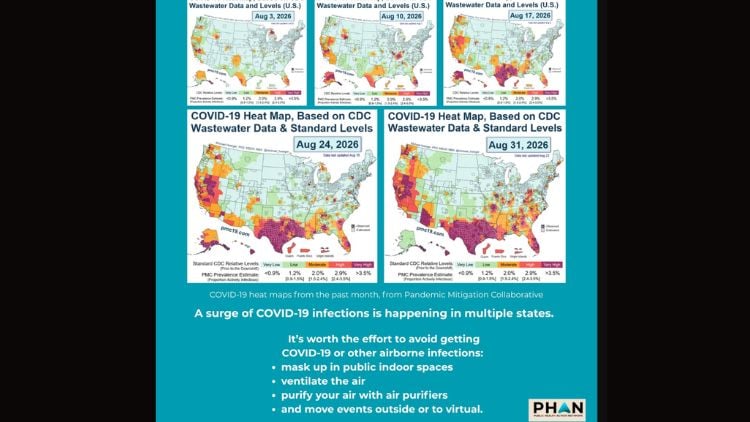
The Centers for Disease Control and Prevention estimates COVID-19 is likely growing in 49 states. However, overall virus activity and COVID-related emergency room visits remain relatively low.
Wastewater testing shows some parts of the country are seeing more virus activity than others. Levels have been especially elevated in parts of the South, with Texas reporting very high levels and Mississippi reporting high levels.
Experts say several factors could be contributing to the late-summer increase. Hot weather can push people indoors, where the virus spreads more easily. Children returning to school and more indoor gatherings can also create opportunities for COVID to spread.
Waning immunity and the natural cycle of the virus may also be playing a role.
COVID Symptoms to Watch For
COVID can cause a wide range of symptoms, and the illness may look somewhat different from person to person.
Symptoms can appear two to 14 days after exposure. According to the CDC, common symptoms include:
- Fever or chills
- Cough
- Shortness of breath
- Sore throat
- Stuffy or runny nose
- Fatigue
- Muscle or body aches
- Headache
- Nausea or vomiting
- Diarrhea
- Loss of taste or smell
Loss of taste and smell, once considered one of the most recognizable signs of COVID, appears to be less common than it was earlier in the pandemic.
Some People Are Reporting a Severe Sore Throat
Doctors say a particularly painful sore throat has been reported by some people infected with currently circulating versions of the virus.
Dr. Thomas Russo, an infectious disease expert, said some patients describe an extremely intense sore throat, while others experience a much milder version.
For some people, COVID may now resemble an ordinary cold. They may experience congestion, a sore throat, coughing and other upper respiratory symptoms.
Others may become more sick and develop fever, chills, headaches and body aches.
A dry cough that does not produce mucus can also occur.
Stomach Problems Can Happen, Too
COVID doesn’t always affect only the nose, throat and lungs.
Some patients develop gastrointestinal symptoms such as nausea and diarrhea. These symptoms can occur alongside a sore throat, cough or other cold-like symptoms.
That overlap can make it difficult to determine whether someone has COVID, a cold, the flu or another respiratory illness based on symptoms alone.
Why COVID Can Feel Different for Everyone
There isn’t one set of symptoms that everyone with COVID will experience.
A person’s immune system, age, previous infections and existing immunity can all influence how sick they become. The amount of virus a person is exposed to may also play a role.
Younger, otherwise healthy people with existing immunity are more likely to experience an illness that resembles a cold or mild upper respiratory infection.


0 commentaires:
Enregistrer un commentaire